Jack Murray - RamblingsWhen gibberish symbols become meaning526 words (approx 3 min)
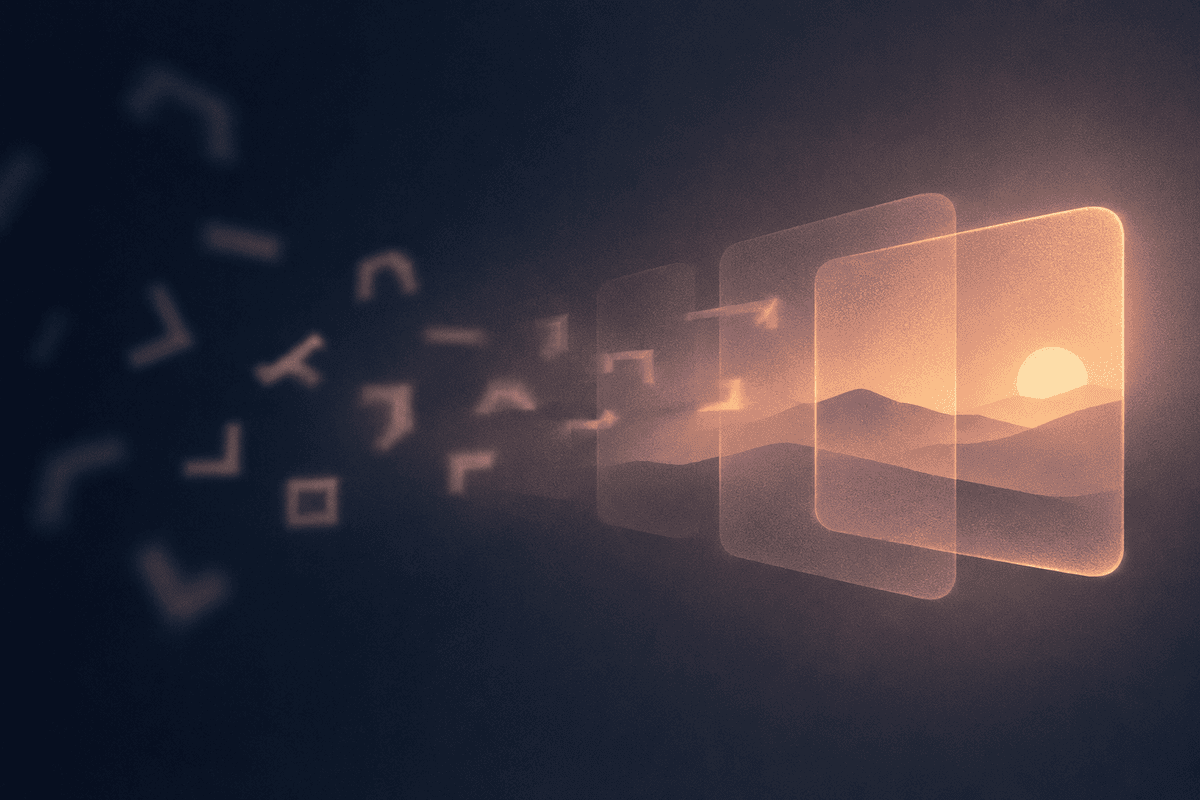
Something I've been finding pretty mind-bending as I learn Japanese is how something that was once complete gibberish to me is slowly becoming something I can just... understand.
Think about it.
Not even 18 months ago, I could look at a page of Japanese text and see nothing but a collection of weird symbols. Completely incomprehensible. I wouldn't even know where one word ended and another began.
Now, I can look at that exact same text and actually extract meaning from it. Ideas, emotions, humour, information.
There's a part of that I find really wild though...
Imagine I'm reading something in Japanese on my laptop, and someone with absolutely no Japanese ability looks over my shoulder.
We're both looking at precisely the same thing. The same pixels, the same characters, the same arrangement of shapes.
For example:
電車の窓に映る自分の顔を見て、もう子どもではないのだと思った。
To someone that doesn't know Japanese, it's effectively meaningless symbols.
To me, it's a coherent string of information that says something meaningful. "Looking at my reflection in the train window, I realised I wasn’t a child anymore".
Our conscious experiences are completely different.
Nothing about the external world is different... The difference is entirely in our brains.
And just imagine how this applies to things outside of language learning, and even when people both do understand but just have different internal constructions of how things work or what they mean in their brains.
What does this say about consciousness?
I think this is a really interesting potential window into understanding how conscious experience works.
And how to empathise with others' understandings of reality.
We tend to think of perception as simply experiencing what's in front of us. But clearly, so so much of our conscious experience is actually our brain interpreting what's in front of us, based on everything we've previously learned.
And even stranger, once you get good enough at a language, something else happens.
You even stop consciously decoding it.
Think about how you're reading this sentence right now. You're not analysing each letter, converting them into words, and then consciously working out what those words mean in the sentence.
You just read it. Meaning more or less appears automatically.
That's what Japanese reading is like for native speakers, despite how utterly alien the writing system might look to someone who doesn't know it.
And in the process of learning Japanese, I'm gradually experiencing that transition myself.
It's almost like developing a new way of perceiving reality.
What's super weird too is that once you understand something, it's quite hard to go back to experiencing it as meaningless again. It's effectively a one-way door... I can't look at Japanese words I know now and see them as nothing but random shapes.
My brain has changed how I experience them. Probably forever.
Of course, none of this says anything about why we have subjective conscious experiences in the first place.
But I find it fascinating that something as ordinary as learning to read another language can so dramatically change your conscious experience of the exact same physical world.
The meaning was always there.
My brain just didn't know how to see it yet.